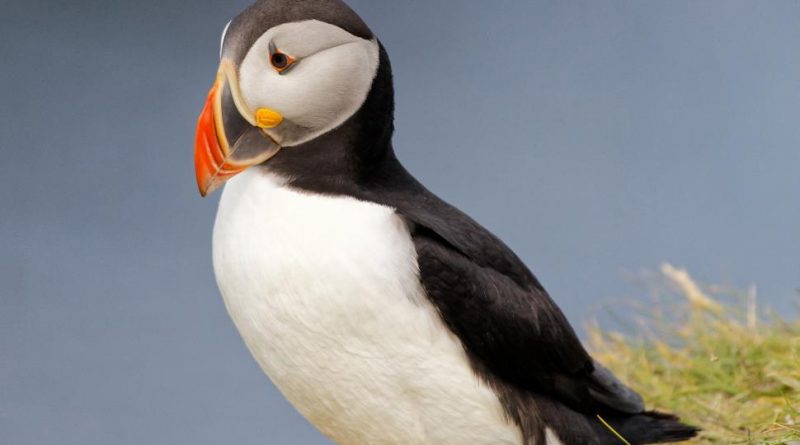
Puffins are one of life’s little treasure birds, absolutely stunning little animals and they nest on Anglesey too!
Puffins spend the majority of there lives at sea, they are fantastic swimmers, this enables them to catch fish at depth (up to 70 metres). As the weather begins to warm they head back to land for the breeding season. Puffins will dig burrows to lay there eggs in as apposed to a more traditional birds next. On puffin Island they are slightly different and tend to lay their eggs in cracks in the rocks on top!
They are a beautiful birds with bright oranges legs / feet and equally as bright beak. They are often affectionatly refered to as sea parrots. You can see them bring back mouthfuls of sand eels to feed their chicks. The record for one bird was 70, which is huge given they are only small birds.
The breeding season is from April to July, this is the only chance you will have to see them before they head out back to sea. South Stack is known as one the best places to see them in the UK to see Puffins. Skomer Island in Pembrokeshire and St. Kila in Scotland are also the best places to see them. The St.Kilda colony contains over quarter of the Puffins entire population in Europe.
You can see the puffins here, RSPB Visitor centre, Holyhead LL65 1YH
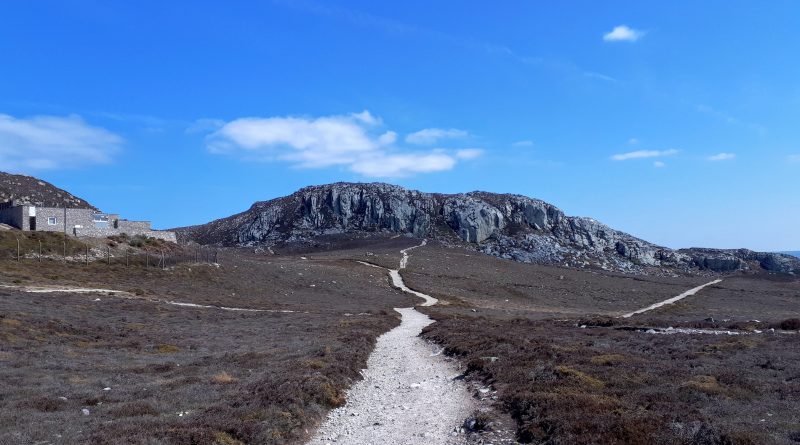
Holyhead Mountain is the highest mountain on Holy Island and Anglesey, its peak reaches 220 metres or 720 feet. Moreover it has a diverse ecology as well as several sites of historical significance. Though officially its not classed a mountain.
An ideal location for a ramble! Numerous paths navigate around or over the mountain taking in different abilities, each one has its own merits. There are several parking areas on different sides of the mountain for you to choose, allowing to get closer to the areas you would like to see.
Given its size there really is so much to see around the mountain. Central paths towards the summit have a broad range of wildlife, including snakes and lizards! The coastal paths offer fantastic views out to sea, chances of seeing seals are high. Dolphins and Harbour Porpoise are also seen around this section of coast. As the weather warms up you may even see a basking sharks in the area.
Historical sites or feature points are dotted around the mountain too, North Stack and its cove full of seals are great to watch, further more South Stack is a haven for sea birds. The nest sites dot the cliffs from April to July with thousand of birds. Puffins nest in the area and the rare Chough is found in its highest numbers across Wales.
I suppose the bucket list item is to walk up to the summit. From here you can almost see across the entire island, Ireland is visible on clearer days.
There are climbers that regularly attempt to sheer south facing side of the mountain, it looks fun but its not to every ones tastes! The mountain is also a great place to bring your dogs, there is tons of space and miles of path ways. Just be careful on the summit as they like to run around, dog forget to bag it and bin it too.
Close to the summit are the remains of an old roman watchtower known as Caer y Twr, beleived to sit within the remains of an Iron Age hillfort. There are also remains of stone circle huts in the vacinity. It is believed these date from around the 3rd century.
On the South West coast of the mountain is South Stack and its RSPB visitors centre complete with cafe and toilets. Home to huge colonies of birds, moreover, you can watch these from Ellins Tower. You may even get a glimpse of the resident Peregrine falcons. On the approach to the visistors centre you will see a small carpark on your left. Park here and just across the road you will find Ty Mawr, a collection of stone hut circles around 2000 years old.
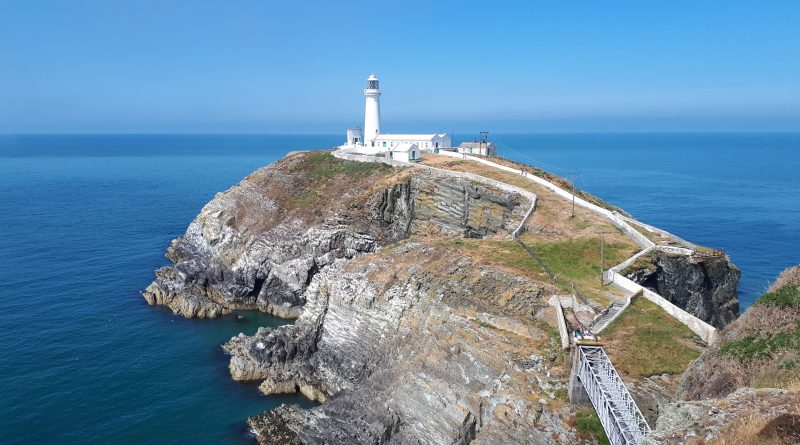
South Stack lighthouse is based on the western edge of Holy Island, it takes its name from the cliff section it resides by “South Stack”.
Built in 1809 by Trinity House (official lighthouse authority for England and Wales and currently operated remotely) to protect shipping from the rocks around the cliffs it has stood the test of time. That’s no mean feat given the often turbulent and stormy waters off the west coast of Wales.
Today it is still in use as a lighthouse guiding ships across the coast of Anglesey, it is also run as a visitor attraction by South Stack Ynys Lawd Ltd under licence.
The 400 hundred steps down to the bottom is easy enough if going steady but coming back up is a bit of a challenge! The very last section is very steep to access the crossing causeway. The views heading down are fantastic, thousand of birds nest here in the spring and summer. If you a lucky you may spot the Puffins that breed here each year, beautiful birds. Keep your eye out for Lizards too as they can be seen darting about at times.
On arrival at the Island there is a attraction fee to be paid before entry. This gives you access to the paths on the Island and the Lighthouse itself. You can take a tour of the old engine rooms and finally make your way up to the top of the lighthouse. This elevated position lets you see 360 degress around the area, you will see just how many birds call this place home.
Hiding to the right of the picture
Parking is free on the RSPB car park where there is a large cafe, toilets and seating inside and out. The walk is a little strenuous so may not be for everyone, regardless there is lots to see with little effort so definitely give it a go. You will need plenty space for all your pictures!