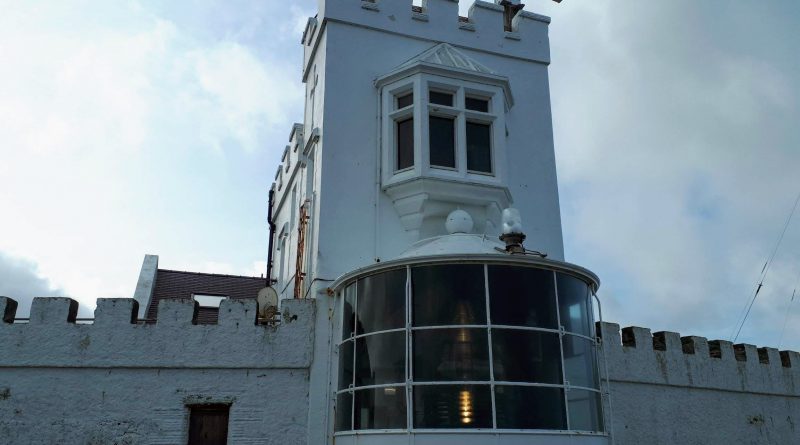
Point Lynas Lighthouse stands proud on the North East coast of Anglesey.
The lighthouse is in a nice quiet and secluded spot within it’s own grounds. A great looking archway marks the entrance to the lighthouse building with two keepers cottages either side.
Originally built in 1766 it was located a few hundred metres south of its current position. It’s previous purpose was to offer shelter to the Liverpool pilots, a lighthouse was only added in 1779.
The current lighthouse is from 1825 and is on the end of headland. This high perch means the lighthouse does not look like the stereotypical structure. There is no need for a tall tower, instead the light is inside a quaint castle type building.
A great feature of the area the lighthouse is based is the marine life. Point Lynas is one of the best spots on Anglesey to spot Dolphins and Harbour Porpoise.
Point Lynas Lighthouse is located at:
Llaneilian, Amlwch, Anglesey LL68 9LT
Closest toilets are just down the hill (towards the beach) from the car park in the village, These are not open year round, holiday season only. LL68 9LT, 15 March – 30 September
There are several functioning Lighthouses on Anglesey. These still serve to keep ships from straying to close to the shoreline. The lighthouses are all now empty of keepers and controlled remotely. They are all operated by Trinity House in Liverpool.
Trwyn Du, Penmon Lighthouse
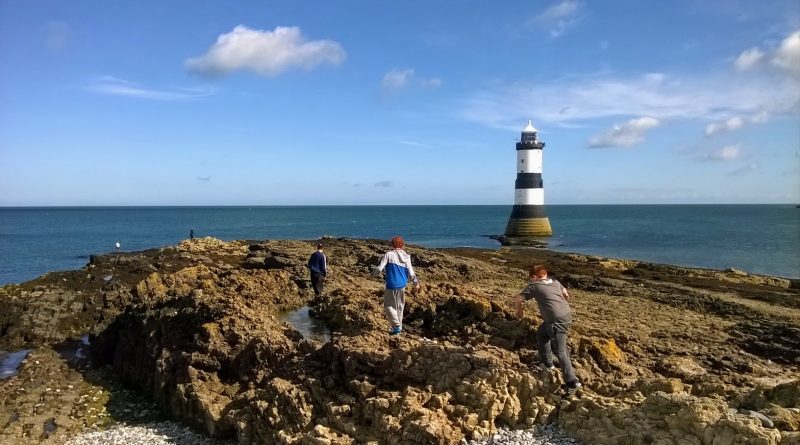
Penmon lighthouse sits at the start of the Menai Strait across from Puffin Island. . Standing at 29 metres tall it was constructed between 1835 and 1838. Getting close to the lighthouse is via a private toll road costing £3.50. The closest postcode for the site for sat nav purposes is LL58 8RR.
Point Lynas Lighthouse
Point Lynas or in Welsh Goleudy Trwyn y Balog is located on the northern coast of Anglesey. Situated on a rocky outcrop overlooking the Irish sea near the village of Llaneilian. The area was served by a pilot station until the lighthouse was added in 1779. You can walk around the entire site and moreover the two keepers cottages on the site are available as holiday lets. The address for Point Lynas lighthouse is Llaneilian, Amlwch, Anglesey LL68 9LT
The Skerries Lighthouse
The Skerries or in Welsh Ynys Moelrhoniad are also called the Isle of Seals. Built in 1716, the only access to the Skerries is by boat as they are around 3km from mainland Anglesey.
South Stack Lighthouse / Ynys Lawd
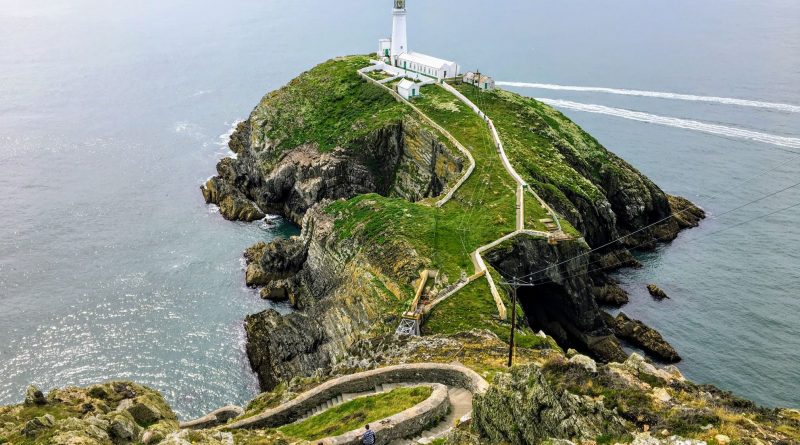
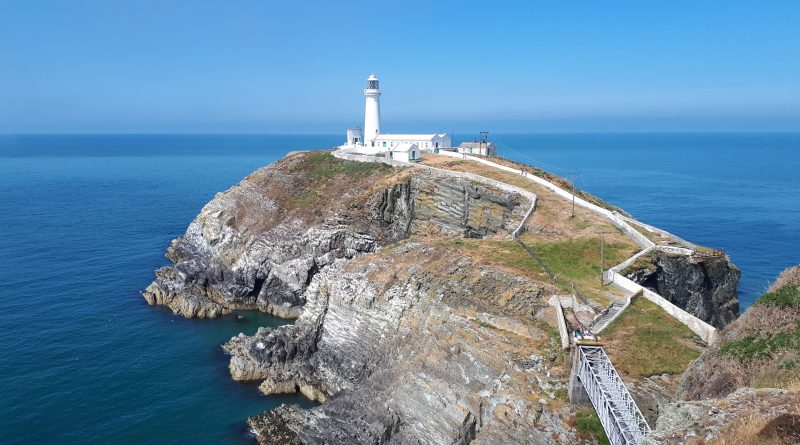
South Stack Lighthouse is based on the Southwesterly tip of Holy island near Holyhead. Built in 1809, it sits perched on it own little island and is accessible via a small metal bridge. The lighthouse grounds and building entrance fee is £6 an adult or £3 for a child. It’s does involve a walk down over 400 fairly steep steps, coming back up is the hard part! The address for the site is RSPB Visitor centre, Holyhead LL65 1YH (parking)
Holyhead Breakwater Lighthouse
Holyhead Breakwater was built in 1873 and the lighthouse was the last structure built on the breakwater. It sits on the very end of the 1.7 mile long harbour wall, the longest in the UK. You can walk the entire length or use a bike to reach the lighthouse. You can find the lighthouse using the postcode LL65 1EP.
To quote James Turner ” Tall flashy washeys no shippy crasheys”
Penmon Point is on the north east coast of Anglesey with views across the mainland, Great Orme and of course Puffin Island. It is also a great place for anglers to target Mackerel in summer. It is also home to one of the 5 working lighthouses located on Anglesey, Trwyn Du Lighthouse.
Penmon Point is the quickest way to get to Puffin Island by Kayak. Moreover it is a brilliant sea fishing hot spot. Also a great place to spot dolphins and harbour porpoise in summer. Seals resident to Puffin island are often seen close to the shore around Penmon Point. The views are on par with what you generally find around Anglesey, beautiful and spectacular. Make sure you take your binoculars and camera!
Access is via a Penmon Point toll of £3, there is plenty of parking at the point itself. It is often frequented by motor home owners who stay for the night, officially it’s not meant to happen. A blind eye is usually turned and you are charged the toll fee again on the way out. Just be mindful that the road down to Penmon Point is not as smooth as it could be and there are a few small speed bumps.
A great holiday let sits on the end overlooking Puffin Island and it’s surroundings. There is also a great little cafe too, good food and a few toys and trinkets for sale. Toilets are for customers only though…you need to ask for the key.
During the evenings when the sky is clear and there has been a decent coronal ejection, the northern lights are visible. Its the perfect spot night and day for photography, trying to catch the dolphins before they dip can be a pain. Another thing that makes Penmon Point special is at certain times of the year is has bio luminescent algae. It is absolutely awesome, the water glows blue when disturbed. Dare I say magical? It will be a treasured memory by all who see it.
At the start of the toll road is Penmon Priory, the remains of the 11th century Aberlleiniog Castle are close too. To get to Penmon Point you have to travel through Beaumaris which has lots to see and do. Beaumaris Castle is great, history, with long dark corridors to explore adults and children love it.
A bit of exploring and a great place to view the local aquatic wildlife at the right time, or just take in the views and relax. Penmon Point is whatever you ask of it. How about taking one of the Puffin Island cruises from Beaumaris as you get to take everything in with commentary.
Definitely try some cake from the Pilot House Cafe or how about catching your own tea? Cheap fishing tackle is available at Anglesey bait centre, Unit 1 Gallows Point Beaumaris Anglesey LL58 8YL Tel: 01248 810009
You can find it here Penmon Point at the following address, Beaumaris, Gwynedd, LL58 8RR. Its worth the toll when chances of seeing Dolphins and Seal are better than other places. You will definitly return to this awesome little spot.
South Stack lighthouse is based on the western edge of Holy Island, it takes its name from the cliff section it resides by “South Stack”.
Built in 1809 by Trinity House (official lighthouse authority for England and Wales and currently operated remotely) to protect shipping from the rocks around the cliffs it has stood the test of time. That’s no mean feat given the often turbulent and stormy waters off the west coast of Wales.
Today it is still in use as a lighthouse guiding ships across the coast of Anglesey, it is also run as a visitor attraction by South Stack Ynys Lawd Ltd under licence.
The 400 hundred steps down to the bottom is easy enough if going steady but coming back up is a bit of a challenge! The very last section is very steep to access the crossing causeway. The views heading down are fantastic, thousand of birds nest here in the spring and summer. If you a lucky you may spot the Puffins that breed here each year, beautiful birds. Keep your eye out for Lizards too as they can be seen darting about at times.
On arrival at the Island there is a attraction fee to be paid before entry. This gives you access to the paths on the Island and the Lighthouse itself. You can take a tour of the old engine rooms and finally make your way up to the top of the lighthouse. This elevated position lets you see 360 degress around the area, you will see just how many birds call this place home.
Hiding to the right of the picture
Parking is free on the RSPB car park where there is a large cafe, toilets and seating inside and out. The walk is a little strenuous so may not be for everyone, regardless there is lots to see with little effort so definitely give it a go. You will need plenty space for all your pictures!
South Stack RSPB on the western coast of Holy Island. Home to the huge colonies of nesting sea birds that call it home. From the breakwater at Holyhead round to South Stack the cliffs rise from the sea. Vertical in places and upto 60 metres in height.
South Stack Cliifs
A haven for birds, moreover is has regular visits by marine animals. Dolphins and Harbour porpoise can be seen when in search of food and passing through the area. Seals also frequent the area too, there are a few that inhabit the area near North Stack. In July 2018 two Orcas from a pod in the Hebrides visited the area, Minke Whales can also be seen but sightings are rare.
South Stack Cliffs
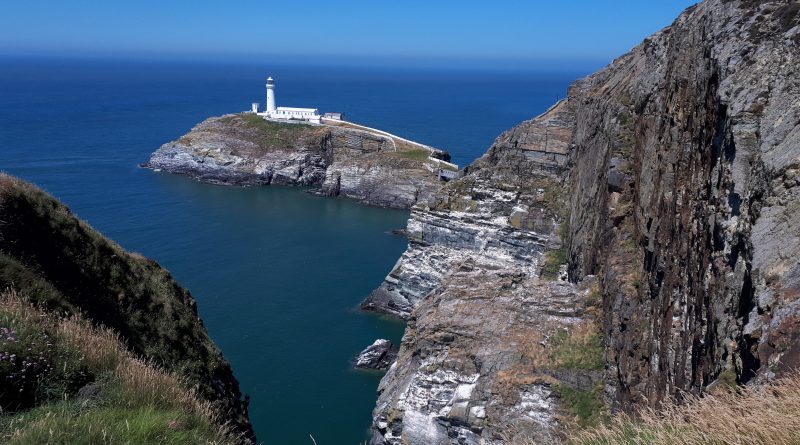
The cliffs are home to nesting birds in the spring, these included Puffins, Giullemots and Razorbills. Chough’s which are now quite rare call South Stack there home year round. Literally the cliffs are covered in nesting birds, the noise they make gives you an idea of how many breed here. There are some great spots to see or take pictures from, it is a gentle walk down to the viewing point and not too difficult to get back up as the path is well maintained. It also has great views over the lighthouse of South Stack.
Bird watching hide
Near the viewing area is Ellin’s Tower. Built between 1820 and 1840 by the Stanleys of Penrhos as a summer house. It is now an information centre for the RSPB, it has great views around the area with a camera on the cliff nests veiwable inside.. There is also free use of binoculars too which the kids (and adults) may enjoy. Occasionally you make catch a glimpse of a passing Basking Shark which are the 2nd largest of the shark species. This is generally in the warmer months of May to September.
The area is managed by the RSPB who look out for the nesting birds. There is a great new cafe and visitor centre which also has toilets. The cake selection looks amazing with good portions too. Seating areas outside let you soak in the view and sunshine (weather permitting) while you eat, drink and relax. You have sea views for miles around with the hills of the Llyn Peninsula in the distance.
Elins Tower
Parking is by pay and display but not expensive, it is able to take coach parties too. If you like bird watching or stunning scenery, South Stack RSPB without a doubt should be on your list to visit.
You can find South Stack RSBP at RSPB Visitor centre, Holyhead LL65 1YH